Identify Hazardous Trees: Key Signs to Watch For
How to Identify Hazardous Trees on Your Property: Signs, Risks, and Professional Assessment
A hazardous tree is any tree or major limb that has a high likelihood of failing and causing damage to people, structures, or utilities, and early identification reduces both safety risk and repair costs. This guide explains how to spot dangerous tree signs, why those signs matter for structural failure and disease spread, and what homeowners should do immediately to protect people and property. You will learn the most common visual indicators—such as trunk cracks, fungal conks, large dead branches, and exposed roots—the risks each sign implies, and practical steps for triage and mitigation. The article also outlines when a certified arborist should perform a formal tree risk assessment and what that inspection typically covers, so you can make informed decisions about pruning, cabling, or removal. If you are concerned about a specific tree on your property, consider contacting Volusia Bobcat & Tree Service for a free onsite quote from a licensed, insured crew while you read the practical assessment and safety guidance below.
What Are the Key Signs of a Hazardous Tree?
A hazardous tree shows visible structural defects or health problems that increase the chance of partial or total failure, and recognizing these signs early allows homeowners to prioritize interventions. Common high-risk indicators include large trunk or branch cracks, cavities or hollow trunks, fungal fruiting bodies at the base, extensive deadwood in the crown, and exposed or heaving roots that undermine stability. These signs map directly to risks—structural failure, internal decay, pest-driven weakening, and root loss—and should trigger safety-first actions such as clearing the target area and arranging a professional inspection. The short list below highlights the most actionable signs to watch for when assessing trees near homes or high-traffic areas.
- Large vertical or seam cracks in trunks or major limbs indicate internal splitting or decay.
- Fungal conks (mushroom-like growths) at the trunk base generally point to internal wood decay.
- Persistent crown dieback or many large dead branches raises the chance of falling limbs.
- Soil heaving, exposed roots, or a sudden lean suggest root failure or root-plate instability.
This overview helps homeowners prioritize which trees need urgent attention and which can be monitored, and the following table summarizes common visible signs, what they indicate, and the homeowner action to take.
Different visible signs point to specific problems and practical homeowner responses.
| Visible Sign | What It Often Indicates | Homeowner Action |
|---|---|---|
| Trunk cracks or splits | Structural weakness or internal decay | Keep clear of area; arrange arborist inspection |
| Fungal conks at base | Advanced internal rot | Avoid stressing tree; schedule assessment/removal |
| Large dead branches | Deadwood failure risk | Do not stand or park under canopy; contract pruning |
| Exposed or heaving roots | Loss of root anchorage | Restrict activity near tree; urgent evaluation |
This table helps triage visible problems so homeowners can decide whether to monitor, secure the area, or seek professional help.
How to Recognize Structural Defects Like Cracks and Hollow Trunks
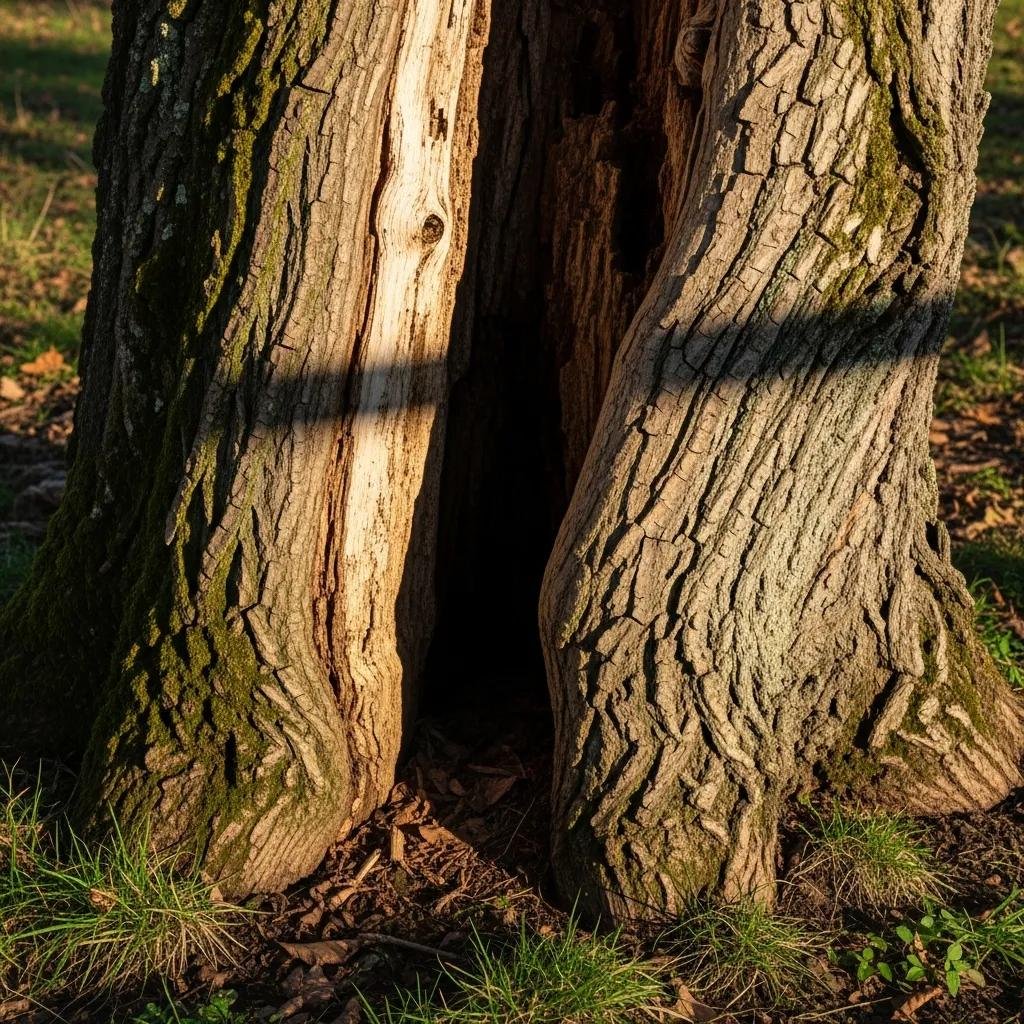
Structural defects show in patterns a homeowner can learn to read: vertical cracks that follow the grain suggest splitting under load, seam cracks near branch unions can presage limb failure, and large cavities or hollow trunks indicate extensive internal decay. Look for changes over time such as widening cracks, new wood chips accumulating at crack bases, or cavities that extend from root flare upward; these progressive patterns often mean the tree’s internal support is compromised.
While a small seam may be repairable with corrective pruning or cabling, large trunk splits or hollows near the main stem usually require an arborist’s assessment to determine whether retention is safe.
If you find significant structural defects, limit access under the canopy and get a professional inspection promptly to evaluate options like targeted pruning, cabling, or removal.
What Visual Symptoms Indicate Tree Disease and Pest Infestation?
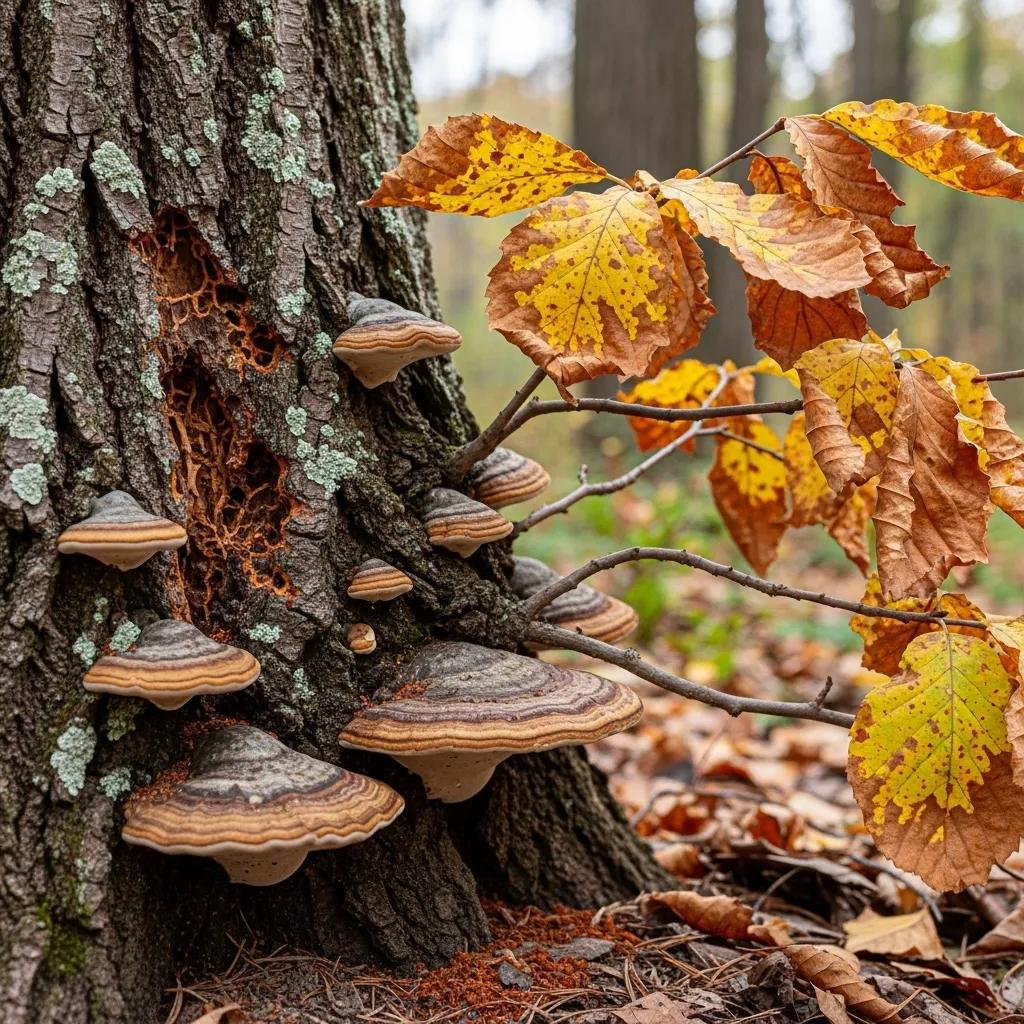
Disease and pests cause specific external signs that often correlate with internal decline: fungal conks at the trunk or root collar typically point to heart-rot or root decay, boreholes and sawdust indicate boring insect activity, and patterned leaf discoloration or cankers reveal vascular diseases.
Inspect the canopy for progressive dieback starting at branch tips, unusual leaf loss, or epicormic shoots on the trunk—these symptoms can signal chronic stress or systemic infection that reduces structural integrity.
Early-stage pest or disease issues can sometimes be treated or contained, but when combined with structural defects they elevate the failure risk and call for a professional diagnosis. Document symptoms with photos and notes to share with an arborist, which helps speed accurate diagnosis and targeted treatment recommendations.
How Can Homeowners Tell If a Tree Is Dying or Dangerous Near Their House?
A dying or dangerous tree near structures shows a combination of declining health, structural problems, and target risk that together increase the probability of damage; assessing all three elements determines urgency.
Key checklist items include visible crown thinning or dieback, new or accelerating lean toward a house, large unstable limbs overhanging structures, and signs of root damage or soil disturbance near foundations.
Consider the trajectory and target: a moderately defective tree may be acceptable at the property edge, but the same defects become critical when the tree is directly above a roof, driveway, or frequently used area.
Use the decision checklist below to evaluate proximity and immediacy of risk before contacting a professional for further assessment.
- Crown condition: Look for persistent thinning or sudden branch loss.
- Lean and root signs: Note recent changes in lean, soil heave, or exposed roots.
- Target exposure: Assess what would be hit if a tree or limb fails.
- Progression: Monitor whether defects are stable or worsening over weeks/months.
Applying this checklist helps homeowners prioritize trees for monitoring versus immediate action, and the short table below summarizes what an arborist typically inspects and the likely outcomes.
Arborist inspections evaluate several components to reach a recommendation that ranges from monitoring to removal.
| Inspection Area | What an Arborist Checks | Typical Outcome / Action |
|---|---|---|
| Trunk & branches | Cracks, cavities, decay extent | Pruning, cabling, or removal |
| Roots & soil | Root plate stability, root rot signs | Root surgery, stabilization, removal |
| Canopy health | Dieback patterns, pest/disease signs | Treatment or targeted pruning |
| Target assessment | Potential human/structure exposure | Risk rating and prioritized actions |
This table clarifies what to expect from a professional assessment and how results translate into practical recommendations.
If the inspection recommends action, arranging scheduled intervention prevents emergencies and protects property.
When Should You Schedule a Professional Tree Risk Assessment?
Schedule a professional tree risk assessment whenever you observe major structural defects, signs of advanced decay, a tree leaning toward structures, or after any storm or construction near roots, because a certified arborist can quantify risk and recommend mitigation.
Conditions that should prompt a call include large trunk cracks, visible fungal conks, sudden or increasing lean, significant root exposure, or when trees are directly over high-value targets like homes or driveways.
A formal assessment provides a documented risk rating and an evidence-based plan—options may include monitoring, pruning, cabling, or removal—so you avoid costly surprises and reduce liability.
For homeowners seeking service, consider scheduling a Tree Health Assessment or Emergency Tree Services with a licensed provider to get a professional evaluation and clear next steps.
- Common triggers for an assessment:New trunk cracks or cavitiesFungal growth at base or on major rootsTrees leaning toward structures after storms
Professional assessments clarify options and timing, enabling safer and more cost-effective decisions.
What Does a Certified Arborist Look for During a Tree Inspection?
During an inspection a certified arborist follows a structured process: they evaluate structural defects and decay, assess root and soil conditions, check for pests and disease, and define the tree’s target zone and potential failure modes. The arborist uses visual indicators and, when needed, probes or resistograph testing to gauge internal decay and may grade the level of urgency based on probability and consequence of failure.
Based on findings, the arborist recommends mitigation such as corrective pruning, cabling and bracing, selective removal of high-risk limbs, or full removal when the tree presents an imminent threat.
This evidence-driven approach yields a prioritized action plan that balances safety, tree health, and cost considerations.
How Much Does a Professional Tree Risk Assessment Cost?
Assessment cost varies primarily with scope, tree size, complexity, and urgency; larger trees, multiple trees, or emergency callouts increase time and resources required.
Rather than relying on fixed price assumptions, homeowners should request an onsite quote so the arborist can evaluate hazard factors and provide a tailored recommendation.
Many reputable providers offer free onsite quotes and transparent discussions of possible interventions, which helps homeowners compare options without upfront expense.
If the situation is urgent—such as an actively leaning tree after a storm—expect expedited services and potentially higher emergency fees compared with scheduled assessments.
What Immediate Actions Should You Take If You Identify a Hazardous Tree?
When you identify a hazardous tree prioritize human safety, clear the target zone, and avoid attempting high-risk DIY interventions; immediate, measured actions reduce harm while you arrange professional help.
First, keep people and pets away from the danger area and move vehicles or objects that could be struck by falling limbs.
Second, cordon off the space and post warnings if necessary, and never attempt to climb or cut large limbs without professional equipment and training.
Finally, contact a licensed arborist or emergency tree service for inspection and removal; for urgent threats, seek emergency services that operate 24/7 to address imminent hazards.
- Evacuate and secure the area: Protect people and property first.
- Do not DIY high-risk work: Avoid cutting large limbs or climbing.
- Contact professionals: Arrange expedited assessment or emergency removal.
The short triage table below helps determine urgency and when to call professionals.
Use this table to triage hazard level and decide whether to call emergency services.
| Hazard Level | Immediate Action | When to Call Professionals |
|---|---|---|
| Low | Monitor and document | Routine arborist inspection |
| Moderate | Restrict access; schedule prompt pruning | Within days to weeks |
| High | Evacuate area; avoid the tree | Call emergency tree services immediately |
If the tree presents an immediate threat, contact a licensed provider; Volusia Bobcat & Tree Service lists Tree Health Assessment and 24/7 Emergency Tree Services and can provide a free onsite quote to evaluate and resolve urgent hazards.