Expert Commercial Property Tree Care for Stunning Landscapes
Comprehensive Commercial Tree Management Services for Property Safety and Aesthetics
Commercial tree management brings together hazard mitigation, landscape aesthetics, and regulatory compliance to protect people, infrastructure, and property value on commercial sites. This article explains core services, professional assessment practices, HOA program design, and emergency response strategies so property managers and HOA boards can make informed maintenance and budgeting decisions. Commercial tree care differs from residential work because it emphasizes liability reduction, minimal disruption to operations, and documented plans that satisfy insurers and local ordinances. Below we outline essential services such as removal, pruning, stump grinding, land clearing, and health assessments, explain why certified arborist consultation matters, show how HOA programs can be structured, and describe when emergency tree services are required. For commercial managers seeking a local provider, Volusia Bobcat & Tree Service is a regional option that advertises licensed and insured crews, free onsite quotes and tree health assessments, and 24/7 emergency availability — the practical next step for converting a maintenance plan into action. Read on for service definitions, operational checklists, and decision tools to prioritize tree work on commercial properties.
What Are the Essential Commercial Tree Management Services?
Commercial tree management is a coordinated set of services—removal, trimming/pruning, stump grinding, land clearing, and health assessment—designed to keep business properties safe, compliant, and visually appealing. Each service addresses a distinct risk or asset objective: removal eliminates hazards or enables development, pruning improves structure and sightlines, stump grinding removes trip hazards, land clearing prepares sites for construction, and assessments guide prioritization and budgeting. Below is a concise list of services with practical business benefits and a short comparison table to help property managers decide what to schedule first.
Commercial tree services typically include the following core offerings:
- Commercial tree removal: Safe dismantling and removal of hazardous or development-blocking trees to eliminate risk and free building sites.
- Commercial tree trimming and selective pruning: Targeted canopy work to improve clearance, reduce storm damage potential, and enhance curb appeal.
- Commercial tree stump grinding: Mechanical grinding of stumps to remove trip hazards and prepare landscapes for replanting or paving.
These services reduce liability and improve tenant satisfaction while supporting long-term landscape health and operational continuity.
Intro to service comparison table: The table below compares purpose, typical timeframe, disruption level, and business benefit for core commercial services to support quick planning and vendor selection.
| Service | Typical Timeframe | Disruption Level | Business Benefit |
|---|---|---|---|
| Tree Removal | Days to a week | Moderate (traffic control) | Eliminates hazards; enables development |
| Trimming / Pruning | Hours to days | Low (lane closure possible) | Improves safety and aesthetics |
| Stump Grinding | Hours | Low | Removes tripping hazards; readies site |
| Land Clearing | Days to weeks | High | Site prep for construction |
| Health Assessments | 1–2 days | Minimal | Prioritizes work and reduces liability |
This comparison clarifies trade-offs so managers can sequence work; next we examine how removal and land clearing support commercial development timelines.
How Does Tree Removal and Land Clearing Support Commercial Development?
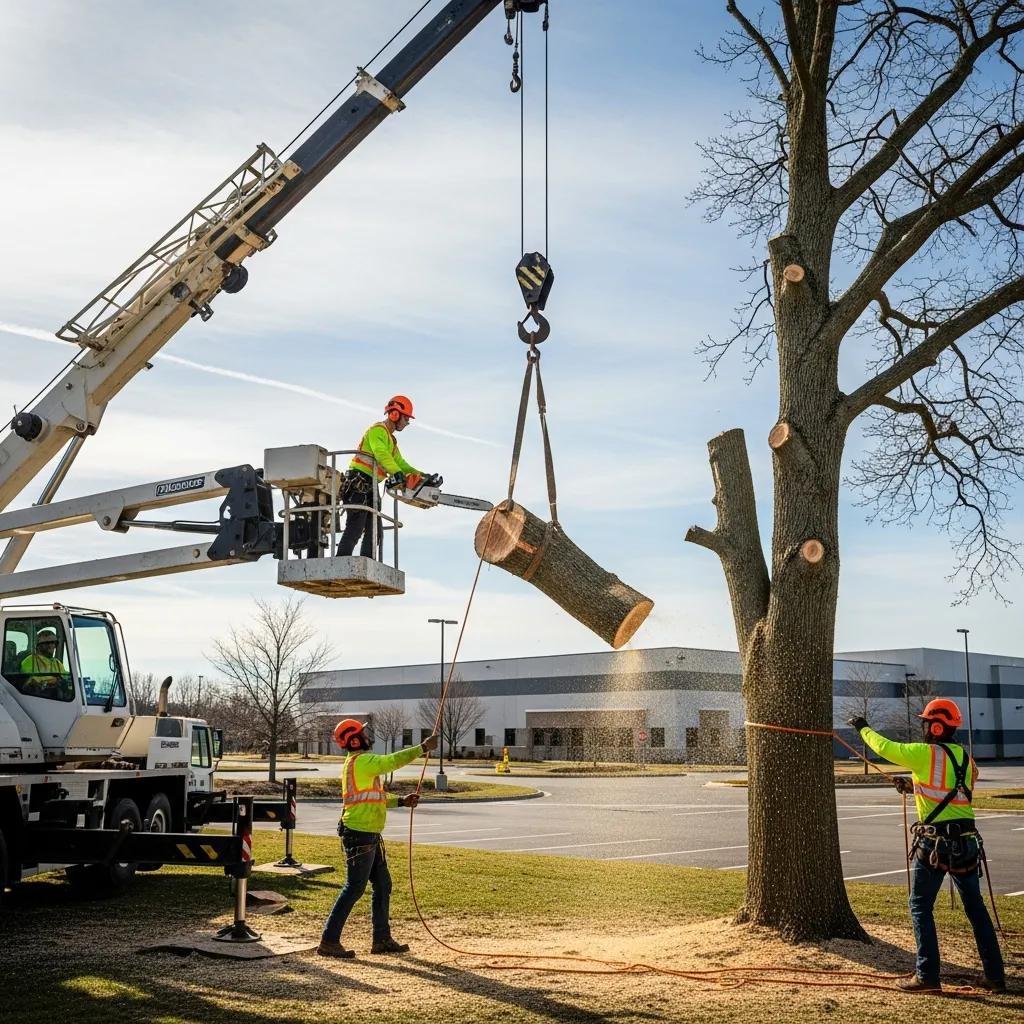
Tree removal and land clearing prepare sites for grading, utilities, and construction by eliminating vegetation that obstructs access, creates stormwater risks, or harbors pests. The process typically begins with a site survey and permit review, followed by staged removal using equipment such as bobcats and cranes for large specimens, and concluded with debris removal and erosion controls. Coordinated removal shortens project timelines, reduces contractor conflicts, and lowers potential for rework caused by hidden roots or unstable soils. Understanding permit requirements and staging also helps developers avoid costly delays.
What Are the Benefits of Tree Trimming, Pruning, and Stump Grinding for Businesses?
Regular trimming and pruning correct structural defects, reduce windthrow risk, and maintain sightlines around parking lots and signage, while stump grinding eliminates tripping hazards and simplifies future hardscape work. Typical commercial maintenance intervals range from 1–3 years depending on species and site use, balancing cost and safety. Pruning also promotes long-term tree health, which reduces emergency removals and insurance claims over time. Proactive maintenance therefore lowers long-term management costs and preserves curb appeal for tenants and customers.
Why Is Professional Arborist Consultation Critical for Commercial Properties?
Professional arborist consultation provides documented risk evaluations, disease diagnoses, and management plans that directly reduce liability and inform capital planning. Certified arborists apply systematic inspection methods to identify structural defects, pest pressures, and site-specific stressors, then translate findings into prioritized work orders and monitoring schedules. For commercial properties this documented approach supports permit applications, insurance underwriting, and board approvals, and it clarifies which interventions deliver the greatest return on maintenance budgets. Below is an assessment table that links common assessment types to outcomes to guide engagement decisions.
Intro to assessment table: This table outlines common professional assessments and the outcomes property managers can expect to ensure decisions are defensible and actionable.
| Assessment Type | Core Attribute | Typical Outcome |
|---|---|---|
| Risk Evaluation | Structural inspection | Liability reduction; prioritized removals |
| Disease Diagnosis | Pathogen & pest ID | Targeted treatment plan |
| Tree Inventory | Species & condition audit | Budgeting and long-range planning |
These assessments translate biological observations into management decisions, helping reduce emergency costs and regulatory exposure; next we detail how arborists conduct those assessments.
How Do Certified Arborists Conduct Tree Health Assessments and Risk Evaluations?
Certified arborists conduct assessments through visual inspections, structural risk evaluation, and targeted tests for pests, root health, and soil conditions, then compile a report with recommendations and monitoring intervals. Typical deliverables include a risk rating, suggested priority actions, and a schedule for follow-up or treatment. This systematic process helps property managers link each finding to a budget item and a timeline, making maintenance predictable and defensible. Clear reports also facilitate communication with insurers and permitting authorities.
What Role Does Tree Health Management Play in Liability Reduction and Compliance?
Tree health management—through documented inspections, maintenance logs, and treatment records—reduces liability by showing due diligence and a reasonable maintenance program to insurers and regulators. Maintaining records of pruning, removals, and assessments demonstrates compliance with local ordinances and supports claims defense if incidents occur. These records also inform insurance renewals and can lower risk profiles over time. Implementing a documented program therefore aligns biological care with legal and financial risk management.
How Do HOA Tree Care Solutions Enhance Community Safety and Property Value?
HOA tree care programs combine scheduled maintenance, inventory tracking, and budget-conscious contracting to protect residents and preserve neighborhood aesthetics. A structured HOA program clarifies responsibilities, phases work to match available funds, and standardizes species and planting guidelines to maintain consistent streetscapes. Below is a comparison table showing program elements and typical HOA outcomes to help boards choose the right combination of services.
Intro to HOA table: The table compares common HOA program elements with expected outcomes so boards can tailor plans to community needs and budgets.
| Program Element | Frequency / Task | Typical HOA Outcome |
|---|---|---|
| Tree Inventory | Annual audit | Clear priorities, better budgeting |
| Scheduled Pruning | Every 3–5 years | Safer streets, improved aesthetics |
| Emergency Response | As-needed contract | Reduced downtime after storms |
These program elements support consistent maintenance and transparent budgeting; below are practical HOA practices that help maintain compliance and curb appeal.
What Are the Key HOA Tree Maintenance Practices for Compliance and Aesthetics?
HOAs should adopt scheduled inspections, pruning cycles aligned to species needs, standards for permit coordination, and planting guidelines that favor low-conflict species near infrastructure. A checklist approach—inventory, prioritized pruning, replanting standards—keeps work predictable and equitable across parcels. Clear maintenance standards reduce resident complaints and lower risk of damage claims. Consistent practices also simplify contractor selection and contract oversight.
How Can HOA Tree Services Be Tailored to Meet Budget and Community Needs?
HOAs can tailor services through phased maintenance, priority-based contracts, and multi-year agreements that spread costs while addressing the highest risks first. Phased work targets hazardous trees immediately and schedules lower-priority tasks over subsequent years, enabling budget alignment without sacrificing safety. Annual contracts often provide cost stability and easier planning, while ad-hoc work addresses urgent issues. Engaged communication with residents and transparent prioritization helps gain approval for multi-year plans.
When Are Emergency Commercial Tree Services Necessary and How Do They Minimize Disruption?
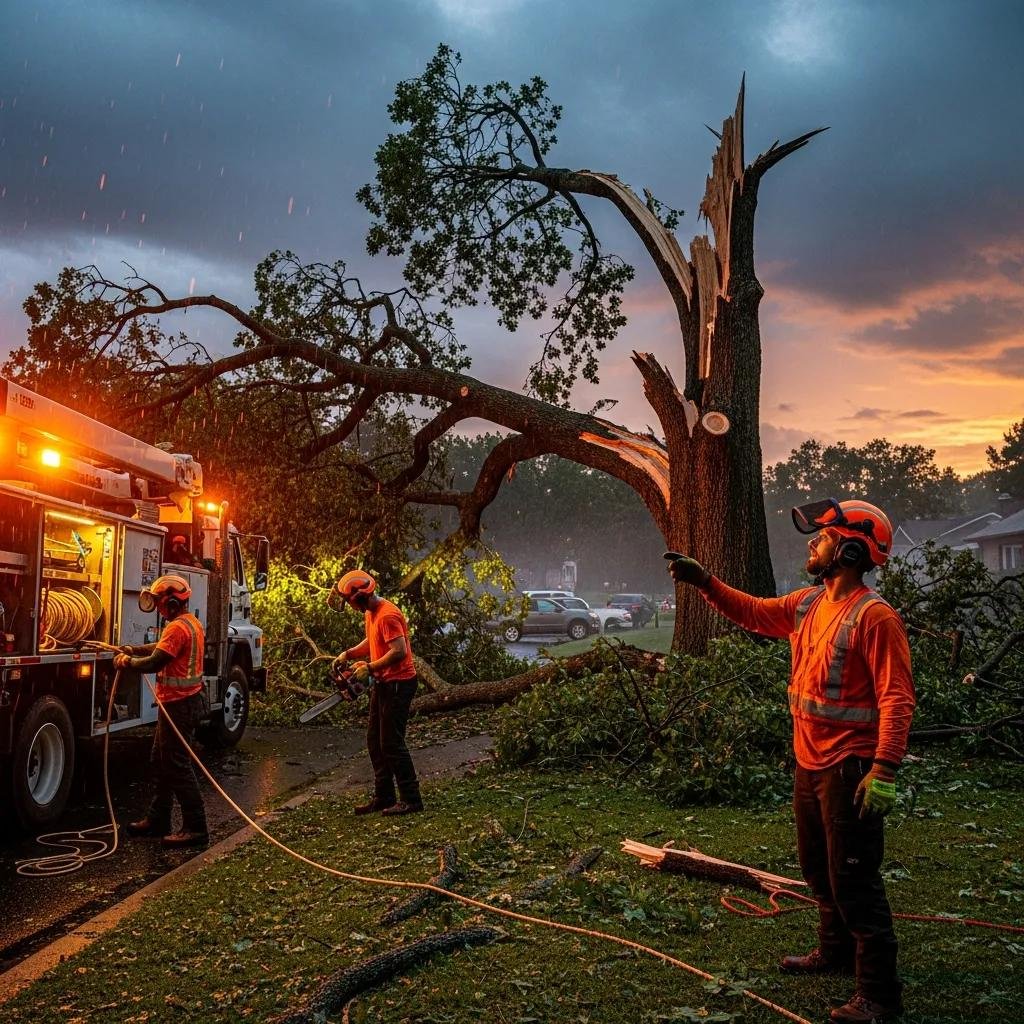
Emergency tree services are required when storm damage, structural failure, or immediate hazards to utilities or access threaten safety or operations. Rapid triage, prioritized removals, and staged cleanup restore safe access and reduce downtime for businesses, while documented action supports insurance claims. Below is a quick list of common emergency triggers and a procedural checklist to minimize business interruption.
Common emergency triggers and immediate responses:
- Storm damage: Triage hazardous trees, secure the site, and remove imminent threats.
- Structural failure: Rapid removal of failed limbs or trunks to protect people and property.
- Utility hazards: Coordinate with utilities, isolate the hazard, and remove obstruction.
These response steps reduce secondary damage and help operations resume quickly; next we outline what storm cleanup typically entails.
What Does 24/7 Storm Damage Cleanup and Hazardous Tree Removal Entail?
Storm response starts with an initial safety assessment and triage to identify immediate threats, followed by staged removal of hazardous trees or limbs using rigging, cranes, or bobcats, and concludes with debris removal and site stabilization. Crews prioritize life-safety hazards and access routes, coordinate with utilities when wires are involved, and clear debris to restore operations. Around-the-clock availability ensures swift mitigation, which limits business downtime and exposure to additional damage. The ability to document actions also supports recovery and insurance processes.
How Does Prompt Emergency Response Protect Business Operations and Safety?
Prompt emergency response reduces downtime by rapidly removing hazards that block entrances, damage assets, or endanger staff and customers, and by stabilizing sites to prevent cascading failures. Quick action lowers the likelihood of secondary damage to buildings, vehicles, and underground utilities, and it demonstrates proactive risk management to insurers and stakeholders. Businesses should expect triage, prioritized removals, and debris clearance as standard services during emergency response.
For commercial property managers ready to act, contact Volusia Bobcat & Tree Service to request a free onsite quote or tree health assessment; 24/7 emergency services are advertised for urgent storm response and hazardous removals. Their licensed and insured crews can provide the documented assessments and prioritized work plans described above to help protect assets and maintain operations.